DC Elections: Candidates Share Views on Animals
DC’s 2026 election promises an upheaval.
Voters can expect a new mayor, and more than half of the DC Council could turn over by 2027. Gone are the days of sleepy, low‑stakes races. This year brings competitive fields, energized challengers, and — for the first time — ranked choice voting.
One thing remains constant: In DC, the Primary Election is the deciding moment.
In our overwhelmingly Democratic city, the candidate who wins the June 16 primary is overwhelmingly likely to win the General Election.
Where the Candidates Stand on Animals
Every election cycle DC Voters for Animals sends a questionnaire to candidates. We ask them about our top strategies to improve animal welfare and protect other species from harm:
Making housing more pet‑friendly
Ending inhumane practices in the fur and foie gras industries
Safe, effective, non‑toxic rat management
Transforming DC’s food system to benefit animals, the environment, and public health
And for mayoral candidates: whether they would appoint a Mayoral Animal Welfare Liaison, a model used successfully in other cities.
In addition to summarizing their responses, you can see the individual responses from each candidate below.
Three Actions You Can Take
Want to support animal friendly candidates? Join DC Voters for Animals to elect the people who will do the most for animals:
1) Weigh in on who we should endorse via our in-person and online forums or via online form below.
2) Vote! Make sure to register, and confirm your registration status.
3) Volunteer with us: Knock doors for animal champion Oye Owolewa who is running for DC Council At Large on Saturday March 21 at 11am.
Three Takeaways from the Mayoral Candidates
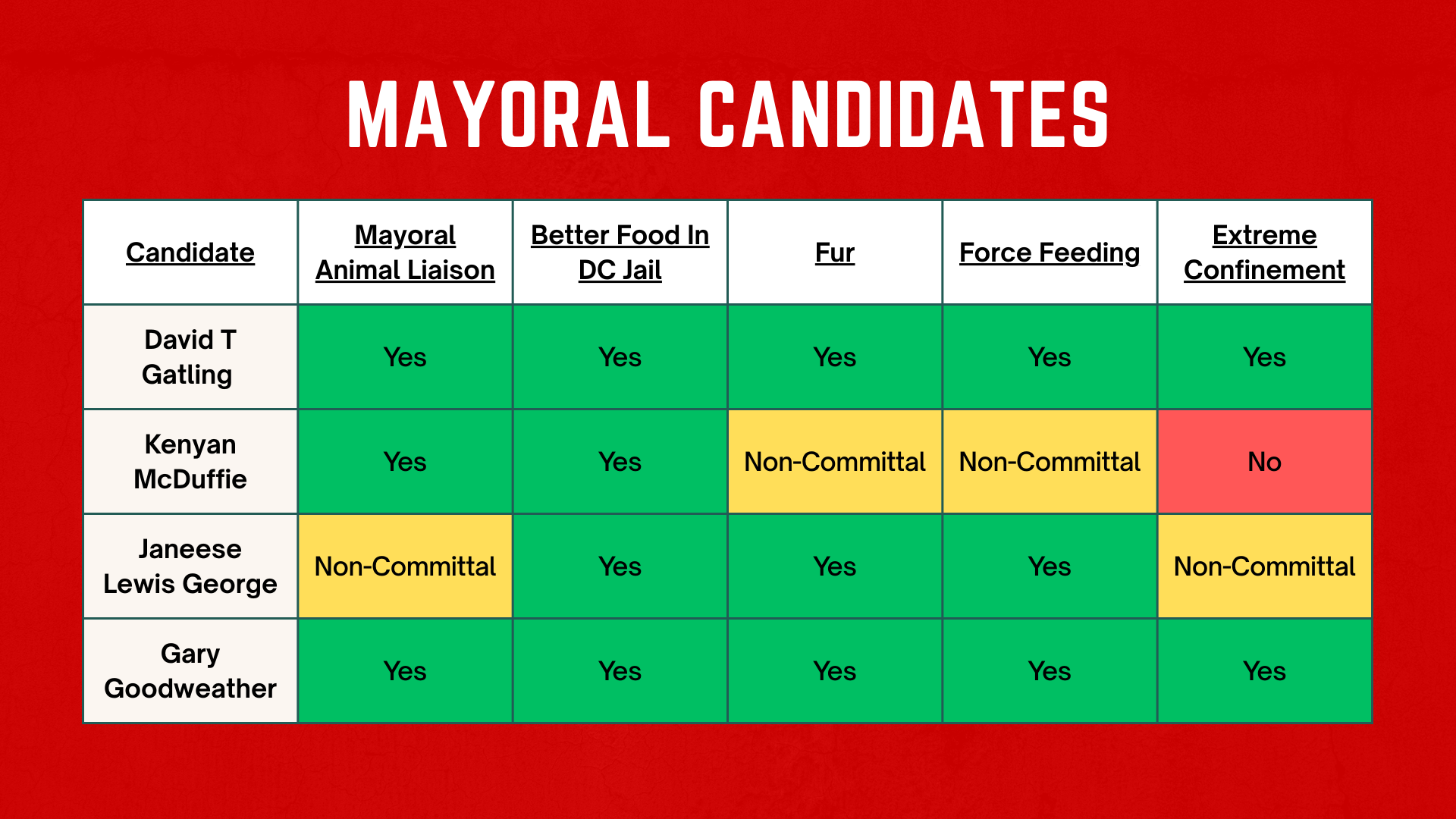
Consensus on Climate‑Friendly Food
Mayoral candidates overwhelmingly support shifting DC institutions — schools, jails, youth services, and more — toward climate‑friendly food purchasing. Despite the city’s long delays in implementing the Green Food Purchasing law, candidates expressed strong commitment to meeting the 2030 emissions‑reduction goals.
A One Health Perspective
Every candidate framed animal welfare as interconnected with broader civic issues: public health, housing stability, environmental stewardship, and community well‑being. This reflects a One Health approach — recognizing that human, animal, and environmental health rise or fall together.
Strong Support for Improving Jail Food
Candidates agreed that improving food in DC’s jail is a justice, health, and dignity issue. They called for evaluating contracts, expanding healthier commissary options, and investing in culinary workforce training for returning citizens. Better food is beneficial for more than animals and the environment—it is imperative for the residents of the jail.
View all mayoral responses in a spreadsheet or see individual responses here.
Responded: David T. Gatling, Gary Goodweather, Janeese Lewis George, Kenyan McDuffie
No response: José Font, Yaida Ford, Kathy Henderson, Regan Jones, Stanley V Lawson Sr, Anthony Muhammad, Terri Little, Hope Solomon, Vincent Orange
Three Takeaways from Council Candidates
Which Issues Are Too Fringe?
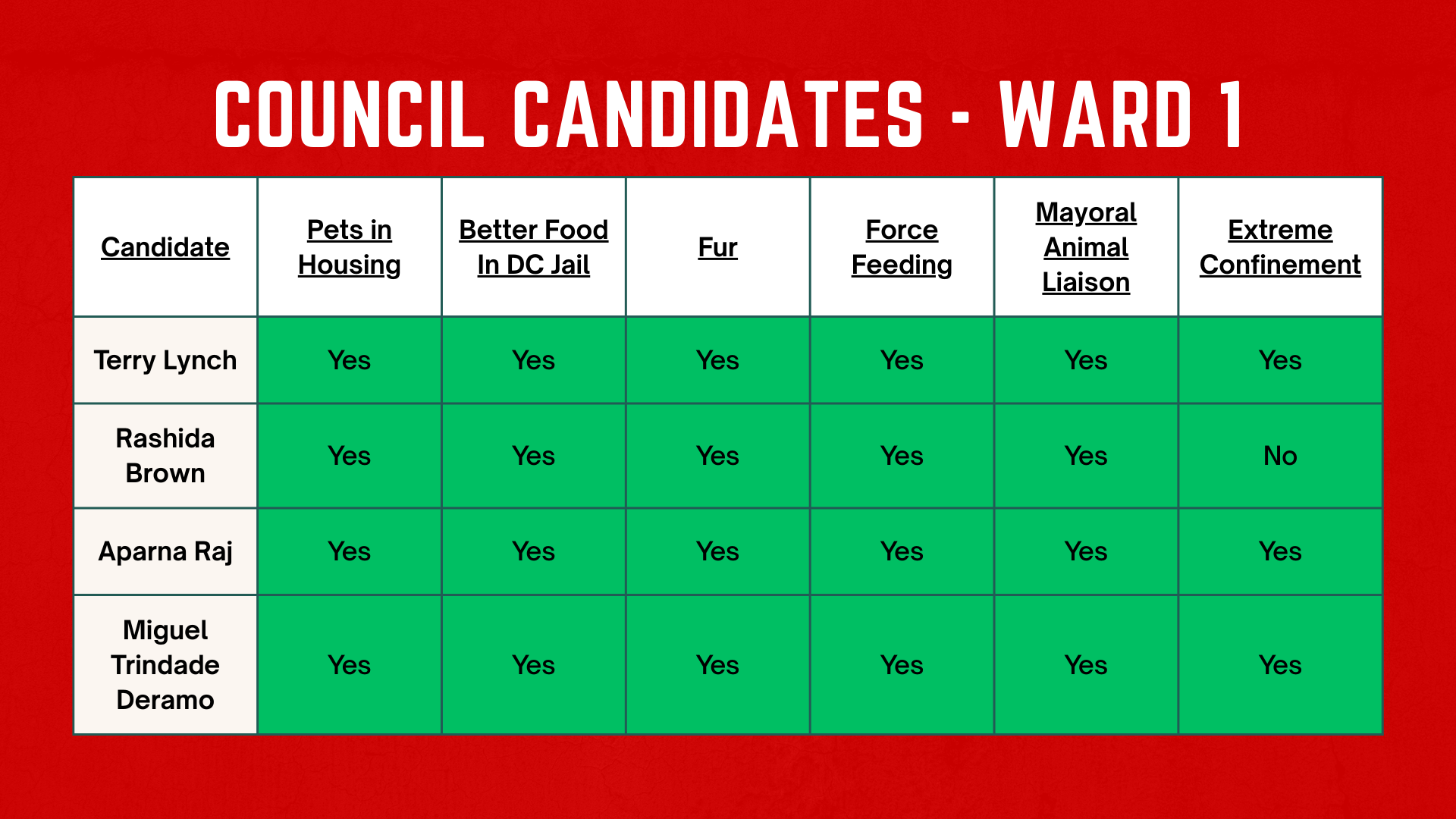
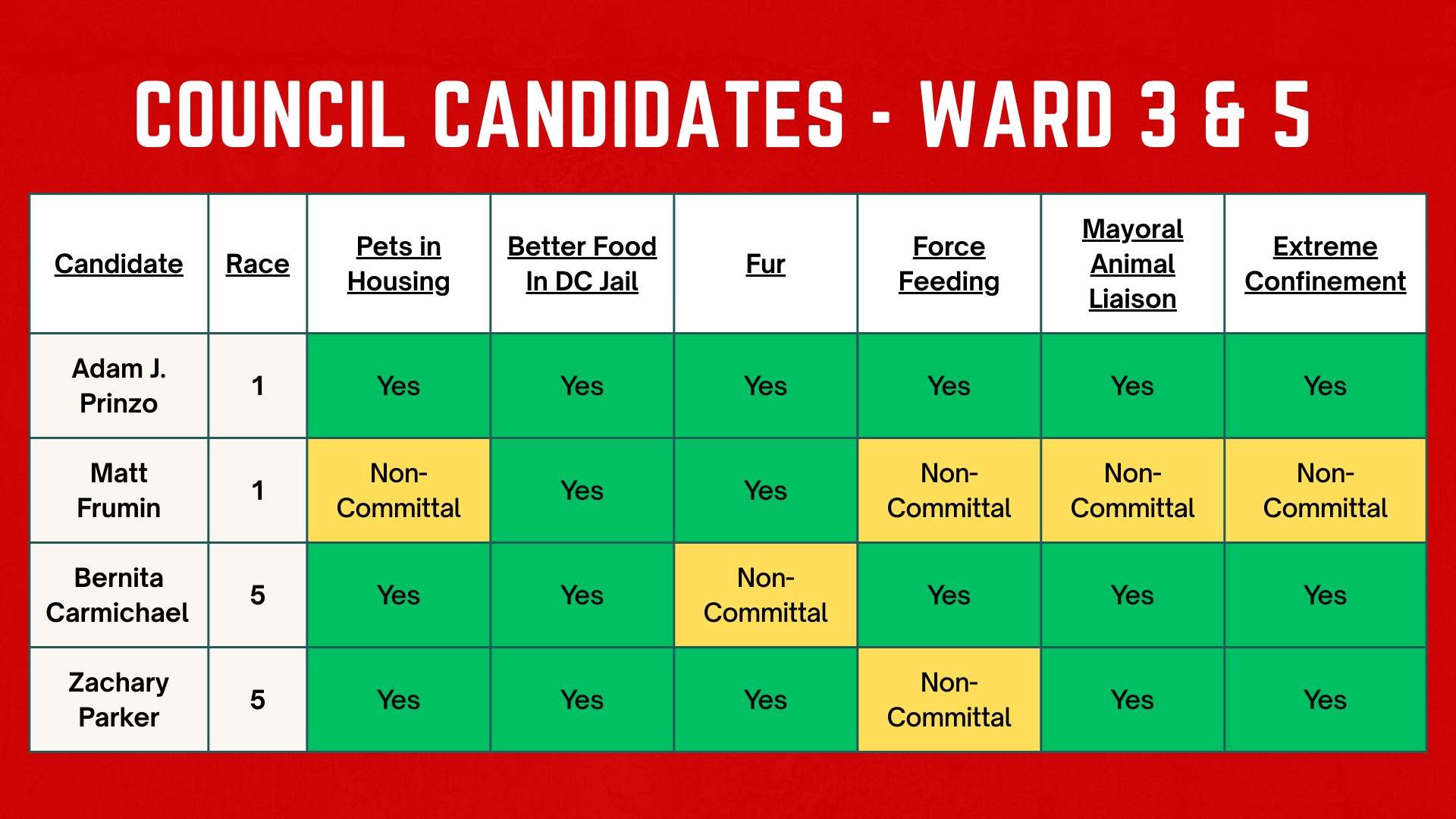
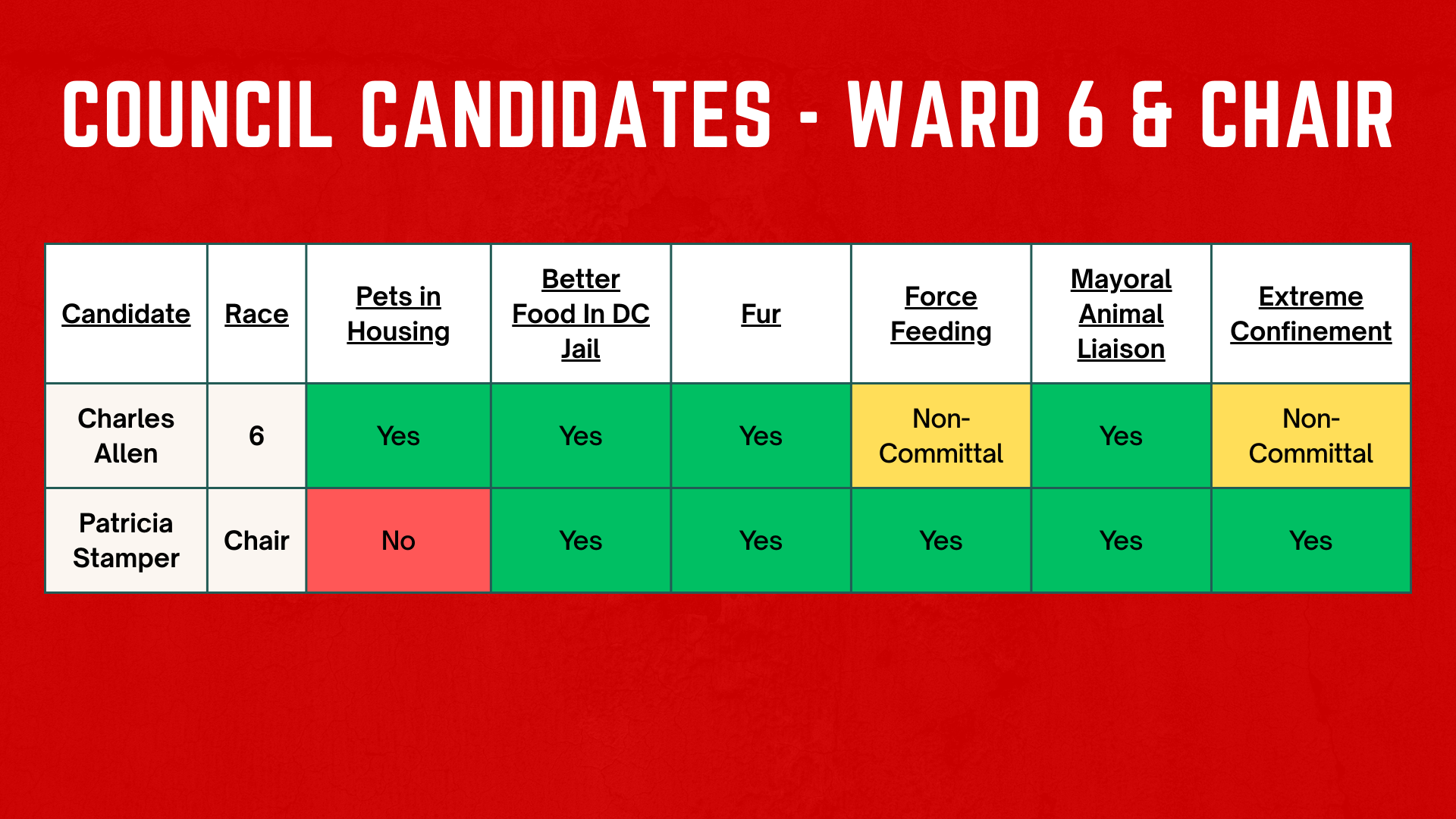
For the first time DCVFA asked several “short answer” questions on popular issue areas. While all Ward 1 candidates unanimously supported these, several candidates expressed reservations about force feeding and extreme confinement—particularly incumbents (who typically take a more cautious approach to questionnaires). This exposed a need for (and interest in!) more education on the merits of these reforms. On the other hand, fur was widely popular, with Ward 5’s Bernita Carmichael being the only candidate dissenting from a prohibition.
Animal Welfare Is Now Intertwined with Housing, Equity, and Family Stability
This is one of the most powerful shifts in the responses. Candidates do not talk about pets as an isolated issue — they refer to a system that includes companion animals in housing justice, racial equity, and family well‑being. Despite Ward 3’s Matt Frumin asking for more data and Council Chair candidate Patricia Stamper’s notable critique, the overall trend is clear: animal welfare is not siloed.
Alignment on Better Rat Strategies
Responses harmonized around the need for better ways to address rats, both to stop rats from reproducing and cut back on the toxic poisons that are killing much more than rats. Political hopefuls suggested better waste management, rodent-proofing waste bins, better composting, more public education, and using poison only as a last resort.
View all council candidate responses in a spreadsheet and see individual responses.
Ward 1: Aparna Raj, Miguel Trindade Deramo, Rashida Brown, Terry Lynch
No response: Jackie Reyes Yanes
Ward 3: Adam J. Prinzo, Matthew Frumin
Ward 5: Bernita Carmichael, Zachary Parker
Ward 6: Charles Allen
No response: Michael Murphy, Gloria Ann Nauden, Marquell Merlin Washington
Chair: Patricia Stamper
No response: Calvin Gurley, Phil Mendelson
We Want to Hear From You
What are your thoughts? Take a moment to share your feedback as we evaluate who to endorse: live events in-person (March 16) and virtual (March 18) or via written comment (deadline: March 20).
Any DCVFA supporter who is not a candidate under consideration is invited to participate. Names will be cross referenced with the DCVFA email list for validation—if you are not currently on the list you can sign up here.